If you are facing felony charges in Alameda County, CA, your case may include a preliminary hearing before it moves toward trial. This hearing gives the prosecution a chance to show a judge that there is enough evidence to continue the case. It also gives the defense an opportunity to question witnesses and challenge the prosecution’s evidence.
Preliminary hearings in Alameda County may take place at criminal courthouses in Oakland or Dublin, based on where the case is being handled. These include the René C. Davidson Courthouse and Wiley W. Manuel Courthouse in Oakland and the East County Hall of Justice in Dublin.
What Is a Preliminary Hearing in California?
A preliminary hearing, sometimes called a probable cause hearing, takes place in felony cases after arraignment. Its purpose is not to decide whether the defendant is guilty.
Instead, under California Penal Code § 872, the judge decides whether there is sufficient cause to believe that a crime was committed and that the defendant committed it. This is a lower standard than the “beyond a reasonable doubt” standard prosecutors must meet to secure a conviction at trial.
Several important things can happen during the hearing:
The Prosecutor Presents Evidence and Witness Testimony
The prosecution presents evidence first. This may include testimony from police officers, investigators, alleged victims, or other witnesses connected to the case.
California law also allows certain law enforcement officers to provide hearsay testimony at preliminary hearings under Penal Code § 872(b). As a result, the person who originally made a statement may not always need to testify personally at this stage.
The prosecutor uses this evidence to establish sufficient cause for the charges to continue.
Your Defense Attorney Can Question the Prosecution’s Witnesses and Present Evidence
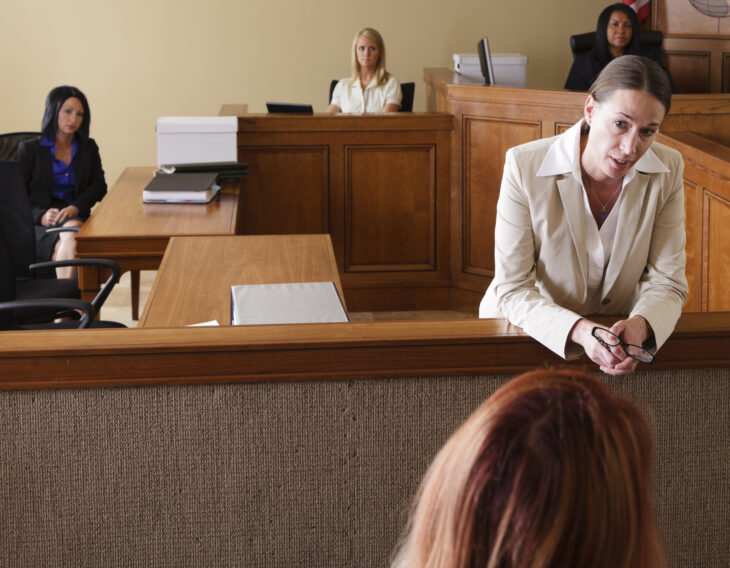
The defense has the opportunity to cross-examine witnesses who testify at the preliminary hearing. This allows the attorney to question their account of what happened and address weaknesses or inconsistencies in their testimony.
Cross-examination can also provide information that becomes important later in the case. A witness’s testimony at the preliminary hearing creates a record of what that person said under oath, which can be compared with other statements or later testimony.
The defense may also present evidence at a preliminary hearing. California Penal Code § 866 permits the defense to offer evidence within the scope allowed at this stage of the case. The attorney may focus on weaknesses in the prosecution’s evidence and whether they have enough to support the charges.
The Judge Decides Whether There Is Enough Evidence for the Case to Continue
After hearing the evidence, the judge decides whether the prosecution has established sufficient cause to continue the case.
If the required showing is made, the defendant is “held to answer.” This means the case can move forward on the charges supported by the evidence. It does not mean the defendant has been found guilty.
If the judge finds that sufficient cause has not been shown, California Penal Code § 871 requires that the complaint be dismissed and the defendant discharged.
What Happens After the Judge Makes a Decision?
When a defendant is held to answer, the prosecution generally files an information stating the charges that will proceed in superior court. The defendant is then arraigned on the information, and the case moves into later pretrial proceedings.
The parties may continue investigating the case, litigating motions, and discussing a possible resolution. If the case is not resolved before trial, the prosecution will ultimately have to prove guilt beyond a reasonable doubt.
Frequently Asked Questions
Is a Preliminary Hearing the Same as a Trial?
No. A preliminary hearing determines whether there is enough evidence for a felony case to continue. A trial determines whether the prosecution has proven the defendant guilty beyond a reasonable doubt.
Is There a Jury at a Preliminary Hearing?
No. A judge hears the evidence and decides whether sufficient cause exists to hold the defendant to answer.
Do I Have To Testify at My Preliminary Hearing?
No. A defendant has a constitutional right not to testify. The defense may present other evidence without requiring the defendant to take the stand.
Contact the Law Office of Nabiel C. Ahmed for a Confidential Consultation with an Oakland Criminal Defense Attorney
A preliminary hearing can be an important stage of an Alameda County felony case. The prosecution presents its evidence, the defense can question witnesses and present evidence, and the judge decides whether sufficient cause exists for the charges to continue.
Attorney Nabiel C. Ahmed has nearly 20 years of criminal defense experience and works directly with clients facing serious charges. Contact the Law Office of Nabiel C. Ahmed today to schedule a confidential consultation with an experienced Oakland criminal defense attorney.
We have convenient locations in Oakland and San Ramon, California.
Law Office of Nabiel C. Ahmed – Oakland
1305 Franklin St #411, Oakland, CA 94612
(510) 271-0010
We are available 24/7

Law Office of Nabiel C. Ahmed – San Ramon
2551 San Ramon Valley Blvd #206, San Ramon, CA 94583
925-725-4003
We are available 24/7